Showing posts with label Eco-Friendly. Show all posts

Wednesday, November 19, 2008

Eco-Friendly Yarn: Local Fiber

You already know that here at Blonde Chicken Boutique, it's all about the Eco-friendly. But what does "eco-friendly yarn" mean? In the next few weeks I'll explain the three main tenets of Blonde Chicken Boutique: Local, Sustainable and Recycled. Living consciously is a journey and I'll be sharing the books, websites and people who have informed my journey. Eco-friendly means different things for different people, but this is what it means for me and for the Boutique.

mystery - handspun yarn


Although all BCB yarn is eco-friendly, my first priority is always to find the most local fiber. Yesterday I shared my reasons for eating locally, today we'll talk about what that means for yarn.

After being committed to eco-friendly yarns for two years, it wasn't until reading Animal, Vegetable, Miracle that I even considered finding local yarn. Sure, I loved meeting the animals and farms at fiber festivals, but it hadn't occurred to me that there might be farmers nearby.
When I decided to find local farms, I figured:

a. there wouldn't be any
b. the ones I found would be happy to sell me yarn, especially since I need to buy it in bulk (to dye for the Boutique)
I was wrong on both counts!

There are quiet a few lovely local farms, which I found through a combination of searching and serendipity. But the farmers I found are just that: farmers. Most aren't fiber artists or spinners or knitters! So even though they loved their fiber animals, most farmers aren't stocked with the actual fiber products (roving, yarn, etc).


In fact, most sheep farmers (that I've met) send their fleeces to the Wool Pool. The Wool Pool is mysterious, semi-governmental thing in some states. You can read about Tennessee's here. I learned that some wool distributors (like R.H. Lindsay) also hold them. The premise is that a processor collects wool from a bunch of different farms and pays the farmers a flat fee per pound. That fee is usually no more than 20 or 30 cents per pound. Compare that to the $30 (or often much more!) per pound that spinners pay for commercially processed roving and you can see that the farmer is NOT getting much of the profit of this product.

Supporting the farmer's in my community is one reason to buy local, but just as important to me is the connection to the fiber and to the animal. Those wool pools through Merino in with Icelandic; even the single-type wools are a mishmash of excellent and sub par fleeces. Instead of highlighting the remarkable, the wool pool reduces all to mediocricy. Buying the fleece right from the farmer and washing it myself, that allows me even more control and freedom! I'm not the only fleece-loving geek, Fuzzy Galore wrote an excellent article on why you should process your own fleece.

So what do I do?
  1. Continue to look for local shepherds. Sure, I have my favorite farms, but if I'm going to provide you with ONLY small-farm fiber, I need to find a lot more of them!
  2. Build a relationship with the farmer's I've met - by doing free spinning demos at their farm, referring my friends there and just keeping them up-to-date on the fiber products I'd like to purchase. I also meet up with them at local fiber festivals, provide feedback on projects their working on (processing their fiber into yarn, etc) and hook them up with other local fiber-people.
  3. Buy what they have. Whether it's a fleece or roving or yarn I might not have otherwise picked, showing my support by actually buying what they offer is incredibly important.
  4. Learning how to process the fleece into yarn (or find small local mills - which I'm still working on!). Before I started meeting local farmers, I never even considered spending my fiber-time on washing and carding a fleece. But once I saw that the only way to go local was to learn to rely on myself - it seemed obvious. And it ended up being fun and teaching me so much more about fiber, in all it's stages between farm and yarn!


Looking for local fiber?
Of course, you can always check out the Boutique, full of wooly goodness that is local (to me). If you live in the area, I'd be happy to deliver the fiber to you or take you to the farms!
If you want to find fiber close to you, I suggest you:
  1. Check Local Harvest (type "wool" into the "Products" box). Call the farms and explain that you're a knitter. Before you visit, I recommend asking IF they sell their fiber and in what form. You might be surprised!
  2. Go to the nearest Fiber Festival (this is a good list.) Head to the barns and chat with the farmers. Ask where their farm is and if they allow farm visits. A lot of the shepherds I've met don't have business cards, so be prepared with a notepad and pen!
  3. Ask around. Although most people look at me like I admitted to being a vampire when I talk about spinning, they all somehow know someone who knows someone who has an alpaca. Or at least an angora bunny.
  4. Call your local 4-H office. Seriously, those kids have every animal imaginable.

Now it's your turn!
Any more tips for people who live in an urban area? Do you work with local fiber?

Monday, November 17, 2008

Eco-Friendly Yarn: What is a Locavore?

You know by now that I'm dedicated to only spinning and dyeing eco-friendly yarns for the Boutique. But what does "eco-friendly yarn" mean? In the next few weeks I'll explain the three main tenets of Blonde Chicken Boutique: Local, Sustainable and Recycled. Living consciously is a journey and I'll be sharing the books, websites and people who have informed my journey. Eco-friendly means different things for different people, but this is what it means for me and for Blonde Chicken Boutique.

feeding time


Although all BCB yarn is eco-friendly, my first priority is always to find the most local fiber. Today I'll cover the locavore lifestyle and tomorrow we'll talk about what that means for yarn.

So, What's a Locavore?

"Locavore" refers to someone who is committed to eating locally: local veggies, local meat, local dairy. I'm blessed to live in a very agricultural area with a long growing season. For 9 months out of the year, I have ready access to fresh fruits or veggies at the local farmer's markets. Since my husband is a vegetarian and we don't make any meat at home, I don't worry about local meat. However, there is a nearby butcher who buys some of his meat locally and the bakery down the street smokes meat and
fish that they've caught. They also make and smoke an excellent turkey sausage. I found dairy products to be the hardest to buy directly from the farmer's, due to legal issues. For eggs, we buy Appalachian Harvest eggs at the grocery store. They are a distributor that collects eggs from many local farms and then packages them and sells them in traditional grocery stores (like my Kroger). We occaisonally get some goat's cheese from Oak Moon Creamery, a local goat farm, but I'm still looking for cow's milk and cheeses.

Farmer's Market - 7/5/08


How did I become a locavore?


Raised to eat fresh food, my mom often bought meat, bread and dairy from our Amish neighbors. I've always loved Farmer's Markets and farm visits but just in the last year I've become more passionate about supporting local agriculture. For me, it's not about the food, although there are plenty of reasons local food is better; it's about buying directly from the person who grew it. It's about giving back to my community.


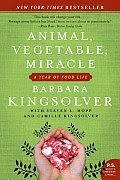
Reading Barbara Kingsolvers' Animal, Vegetable Mineral solidified this from a preference to a passion. In this book, the author and her family commit to eating locally for one year. They have a big garden and preserve a LOT of food to get them through the winter. They also rely on their neighbors for diary and some meat. Kingsolver writes about her connection with the land and her community in a way that is touching and compelling. The book is full of practical advice and she doesn't gloss over the hours of hard work (or the inevitable "harvesting" of her turkeys).


Interested in finding local food?


LocalHarvest simplifies fin
ding farms and stores that carry local produce. Just search your zip code or for a product. This is the best "local" database I've found, at least for my remote corner of Tennessee!

The Eat Well Guide is similar to Local Harvest, but without the huge database of self-added farms (again, this is just in my area). It has an advantage with it's 'Plan a Trip' function which allows you to find restaurants and markets during any road trip! I plan to use the next time I visit my in-laws in Ohio...although I'm very familiar with the highways, I don't know of ANY non-chain restaurants to eat it.
Animal Vegetable Mineral - the engaging book about a year of local.


In Defense of Food - If you're wondering why local food might be better, this is the answer. Less gas to transport, fewer additives, all-aournd less of the bad stuff, more of the good stuff. Except, you know, in more scientific words. Everyone I've shared this book with thought they wouldn't like the book (is it too diet-y? or science-y?) but ended up loving it.

Do you eat locally? Why? Any resources that help you?

Tuesday, April 22, 2008

Recycled Paper yarn - Earth Day!

After much thought and planning, I decided it was time to finally start spinning paper:
I gathered some colorful paper from the newspaper


started cutting strips - cutting from top to bottom, leaving about an inch connecting the strips, then bottom to top

It's hard to explain, but this shows what it should look like!


After all the cutting, I realized this pink paper was MUCH too stiff to spin, so I cut up the TV Guide and spun that.
Really, it wasn't that successful, the paper kept ripping, so the skein is full of knots.
It does look cool, but
There's only 5 yards of yarn for 2 hours of work!


I sent it as an extra gift to a customer that is also a spinner, figuring she would appreciate all the effort!

Happy Earth Day! What are you doing to celebrate?